You can use ChatGPT to understand your ideal customer by asking it to suggest who your customers might be, what problems they have and what words they use, then checking those ideas with real people. An AI agent goes a step further: it works on its own with your files, email and tasks, and remembers your business. Either way, you decide who your customer is and how your message sounds.
If you've asked ChatGPT to "describe my ideal customer" and got an answer that could fit any business, you're not alone. Here's how to get more from it, and what to try when one chat at a time isn't enough.
What can ChatGPT do to help me understand my customer?
It can give you a fast first draft of your thinking. Give it real details about what you sell and who you've helped, then try these three prompts:
- "What types of people might need this most?"
- "What problems might they be dealing with right before they look for help like mine?"
- "What words might they use to describe that problem?"
Mark each answer as "I've seen this" or "I'm guessing." The guesses become your research list.
Why do I still need to talk to real customers?
Because AI will happily build on your assumptions. I learned this myself.
After I sold my tutoring business, I was sure my ideal customer was a midlife woman with grown kids. I could picture her. Then my mentor asked, "Did you research that?" I hadn't. When I did, the research showed I was wrong.
So check what AI tells you:
- Talk to three to five of your happiest customers.
- Ask what was going on right before they hired you, and what words they used.
- Compare their answers with the AI's list, and keep what's real.
What can an AI agent do that a chat can't?
A chat tool starts fresh each time and waits for you to type. An AI agent is more like a team member: it can work with your files, email and task list on its own, remember your business from one day to the next, and keep going while you're busy.
For this topic, that could mean:
- Reading your customer emails and notes to pull out the phrases people repeat
- Keeping a running list of what you've learned about your customers
- Drafting messages in your voice from that list, ready for you to edit
- Reminding you to follow up with the customers you planned to interview
It still can't talk to your customers for you, and you still make the decisions. But it handles the busywork so your time goes to the conversations that matter. You can see how this works at SueBrooke.com/AITeam.
How do I keep my own voice when I use AI?
Edit everything it writes. Read it out loud and ask, "Would I say this to a customer over coffee?" If not, change it. Add your own stories and cut anything that sounds like a brochure.
Try this week: pick your best customer, the one you'd love ten more of. Write down the problem they had, the exact words they used and why they chose you. Then ask ChatGPT what other kinds of people might have the same problem, and call two of them.
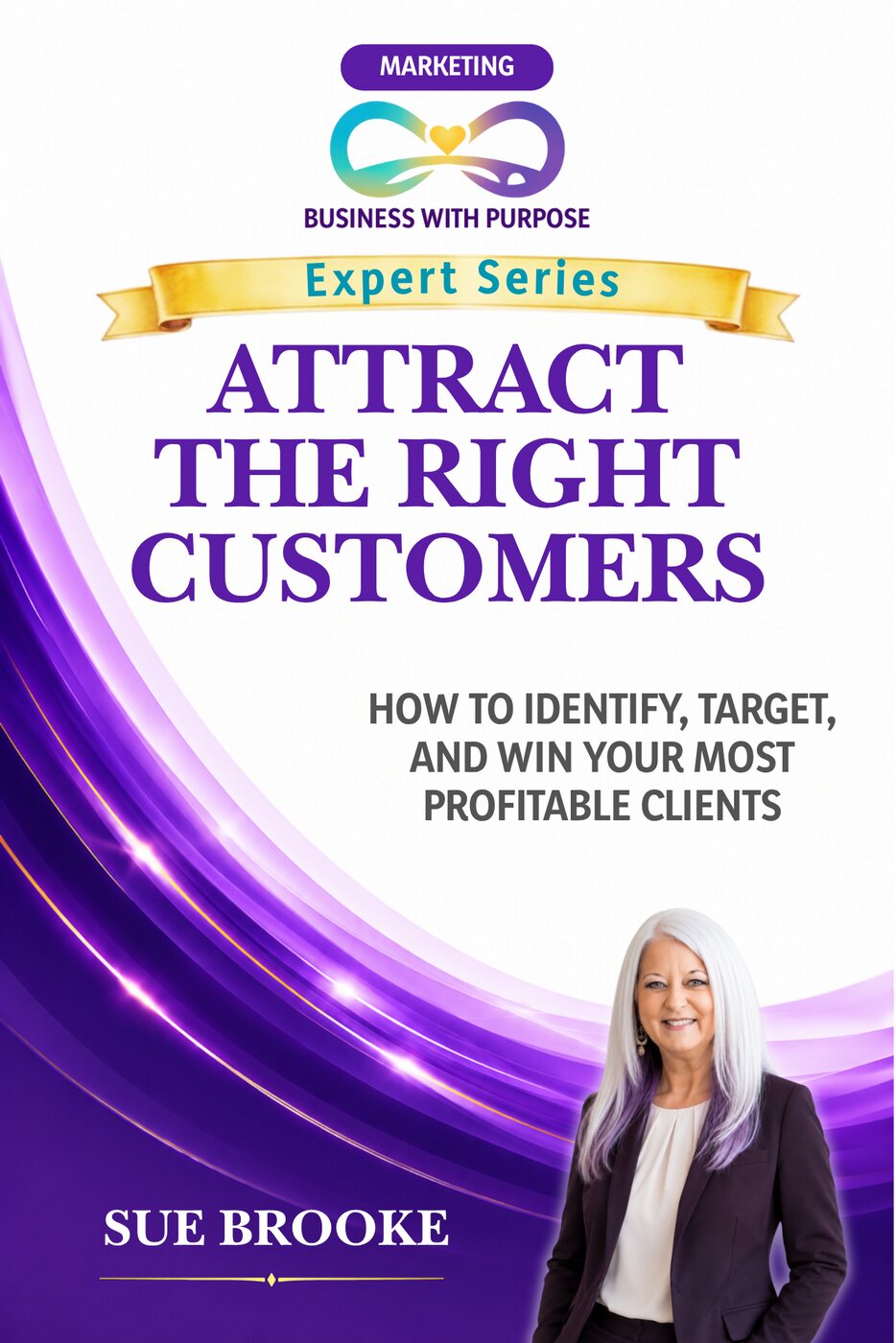
Want the whole roadmap? AI works far better when you already know who your RIGHT customer is. My free ebook, Attract the RIGHT Customers, walks you through the A.T.T.R.A.C.T. Framework step by step, with action steps at the end of every chapter. Get your free copy here.
If you're marketing to everybody, you're marketing to nobody. Start with one real person, and let AI help you find more like them.
Frequently Asked Questions
What are good ChatGPT prompts for a customer avatar?
Give it your real details first, then ask about customers' problems and the words they use. Treat the answers as ideas to check, not facts.
Can I use AI for small business marketing research?
Yes, for the early stages. It's good at brainstorming customer types and questions, but real conversations tell you what people actually want.
What's the difference between ChatGPT and an AI agent?
ChatGPT answers one chat at a time. An AI agent can work on its own with your files, email and tasks, and it remembers your business, so it keeps working between conversations.
How do I use AI to write marketing messages without sounding fake?
Give it your customers' real words and your own stories, then edit the draft until it sounds like you.

Sue is a marketing coach, author and speaker with 40+ years as an entrepreneur, and the former national trainer for Alignable. She teaches business owners how to attract the RIGHT customers. More about Sue